
 LinkedIn
 ALOOSTA
 Contact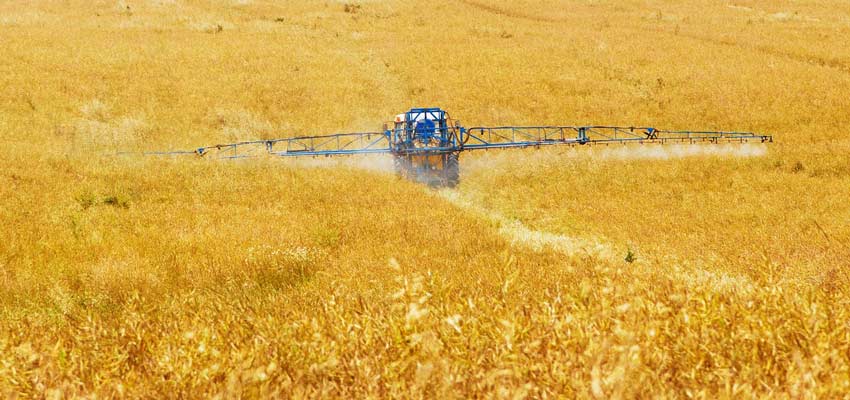
On 13 November 2025, a joint event organised by the GDCh group ‘Senior Experts in Chemistry’ (SEC), DECHEMA e.V. and the Scientific Circle for Genomics and Genetic Engineering (WGG) took place in Frankfurt with approximately 60 participants.
While the world population is growing, global warming is advancing and agricultural land is steadily decreasing, the number of approved pesticide active ingredients is continuously declining. This poses a major challenge for securing the food supply for the world's population. Moderator Prof. Dr. Klaus-Dieter Jany pointed this out in his introduction.
The then highlighted the importance of modern plant protection and how it should be designed to conserve resources in the future from various perspectives.
The first speakers, Maria Valtin (BASF SE, Limburger Hof) and Dr. Susanne Kübbeler (Bayer CropScience Germany), represented the positions of research-based plant protection product manufacturers. They emphasised in particular the approval issues for new, targeted active ingredients, which are urgently needed as many older, more non-specific active ingredients have lost their approval or will lose it shortly.
The current duration of the procedure was illustrated with specific examples. The companies lamented the current EU policy and pointed to the very high risks and costs of developing new active ingredients. They fear that in future they will increasingly be faced with the decision of whether new active substances can still be approved in the EU at all if the approval procedure is not fundamentally reformed. It now takes up to ten years from development to approval of an active substance in the EU, during which time many millions of euros are invested that can hardly be recouped within the life cycle of a new plant protection product.
According to FAO estimates, global crop losses due to pest infestation amount to 40%. While 2,037 plant protection products were still authorised in the EU in 2025, a further 85 active substances will lose their authorisation by 2026. In contrast, not a single new active substance has been authorised in the EU since 2019.
Using the example of three groups of active substances (herbicides, fungicides and insecticides), it was shown how future yield losses will be reduced as the number of active substances decreases. Another problem for agriculture arises from the increasingly difficult task of resistance management.
The following two presentations on innovative plant protection methods dealing with RNA technology were therefore awaited with great interest.
Could so-called ‘RNA sprays’ enable selective, biological and, above all, residue-free treatment of crops in the future? Or are there new risks lurking here as well?
Prof. Dr. Gabi Krczal (Neustadt a. d. W.) explained to the audience that, in accordance with the ‘Farm to Fork Strategy’ as part of the European Commission's ‘Green Deal’ initiative, which aims to halve the use of traditional chemical pesticides by 2030, alternative methods are urgently needed to ensure the harvest volumes required in future to maintain food security.
One of the most promising techniques is . In short, synthetic mRNA is produced and sprayed onto the plants. The mRNA penetrates the plant cells, which then produce the necessary active ingredient for pest control themselves, without any genetic modification of the plant. The applied mRNA breaks down naturally within a short time without leaving any residues. The active ingredient produced by the plant itself is also metabolised naturally after a short time without leaving any residue.
Certainly, the risks of mRNA interference technology (‘gene silencing’) cannot be 100% ruled out at present. However, it would have to be compared with the risks of current plant protection practices, which pose known health and ecological risks.
This is precisely the comparison currently being carried out by the working group of ecotoxicologist Dr. Elke Eilebrecht at the Fraunhofer Institute IME (Schmallenberg) on behalf of the Federal Agency for Nature Conservation (BfN). RNA techniques must be systematically investigated with regard to their specificity, their persistence in the environment and their potential effects on non-target organisms before they can be used. This will take several more years.
Of course, the possibilities of the new genetic engineering techniques were also discussed again in this context. It was not surprising that none of the participants expressed any criticism regarding the classification of so-called NGT-1 plants as not subject to authorisation and labelling requirements in the future.
Even the Swiss ‘eco-pope’ Prof. Dr. Urs Niggli from the Institute of Agroecology in Aarau no longer categorically ruled out the new genomic techniques for organic farming and called for a discussion that was less ideological and political and more purely scientific.
In the concluding discussion in particular, it was regretted that no representatives from the agricultural sector had made their way to Frankfurt to discuss their questions and points of view with the speakers.
YOUR PLUS: AGROLAB remains committed to addressing hot topics. This is particularly important in light of the fact that there must always be reliable and affordable analytical detection methods for all current and future plant protection procedures to ensure that consumers are protected from unsafe food.
Author: Dr. Frank Mörsberger, AGROLAB GROUP


 Contact
 Career